
Take this message with you through a journey of Scripture, reflection, and prayer.
Summary
Themes
Key Points
- 1.Spiritual narcissism is a spiritualized self-centeredness that masquerades as passion and commitment while delivering spiritual trauma and exploitation.
- 2.Persistent prayer is not meant to force God to act, but to shape the spiritual conditioning, endurance, and quality of our own souls.
- 3.Strong faith is long faith—it is measured not by how big you can believe, but by how long you can continue believing through delays and disappointment.
- 4.God allows 'widow seasons' by removing what we previously relied on to deliver us from unconscious codependence and show that He alone is our ultimate source.
- 5.God cares deeply about our heart posture and attitude in spiritual disciplines, rejecting outward practices performed with bad motives.
- 6.Spiritual trauma bonding occurs when alternating cycles of religious abuse and affirmation create an unhealthy attachment mistaken for genuine devotion.
- 7.Unhealed spiritual wounds can lead to scriptural abandonment and spiritual suspicion, causing believers to distrust the very people or truths God sends to bring healing.
- 8.True spiritual recovery requires accepting that while others may have caused your brokenness, taking your pain to God for healing is your personal responsibility.
Sermon Moments
“Some things that look beautiful are actually bait, and some things that look pretty might just be poison.”
“Everything using God's name isn't doing God's work, and everyone that claims Christ is not Christlike.”
“A widow season is a season where God allows the removal of what we previously depended on in order to deliver us from unconscious codependence.”
“The persistence in prayer isn't to get God to do something for you; it's what God is using to do something in you.”
“Big faith for Jesus is high quality. It's not how big you can believe; it's how long you can believe.”
“Spiritual trauma bonding is a psychological attachment that forms when a person experiences alternating cycles of abuse and affirmation within a religious context.”
“The one that broke you broke you so bad you're suspicious of the one God sent to heal you.”
This Week
Remember This
While others may be responsible for the spiritual wounds that broke you, taking those wounds to God for freedom and healing is your own responsibility.
A Challenge for You
Your brokenness is their fault, but your healing is your responsibility.These are personal sermon notes shared to help you remember the message — not a replacement for Scripture, your church, or your pastors.
3 passages. Tap one to see how it was used, hear it, or read it.
Continue this series
Detox - Goated Vol. 5

Sermon
45:50This Is a Lot
Dr Dharius Daniels · Change Church
Nov 24, 2025
Read notes
Sermon
51:20This Does Not Go Together
Dr Dharius Daniels · Change Church
Nov 16, 2025
Read notes
Sermon
43:24How To Handle A Spiritual Bully
Dr Dharius Daniels · Change Church
Nov 9, 2025
Read notes
Part 2 · Current
42:46POISON
Dr Dharius Daniels · Change Church
Nov 2, 2025
Read notes
Sermon
46:48Check Yourself Before You Wreck Yourself
Dr Dharius Daniels · Change Church
Oct 26, 2025
Read notes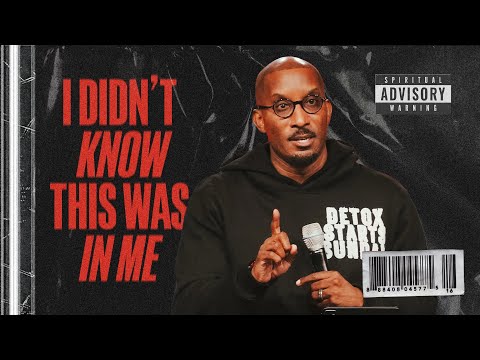
Sermon
56:45I Didn't Know This Was In Me
Dr Dharius Daniels · Change Church
Oct 19, 2025
Read notes


